Deepdive
CZ Is Working With Governments to Put National Currencies On-Chain

by Crypto Rich
February 6, 2026
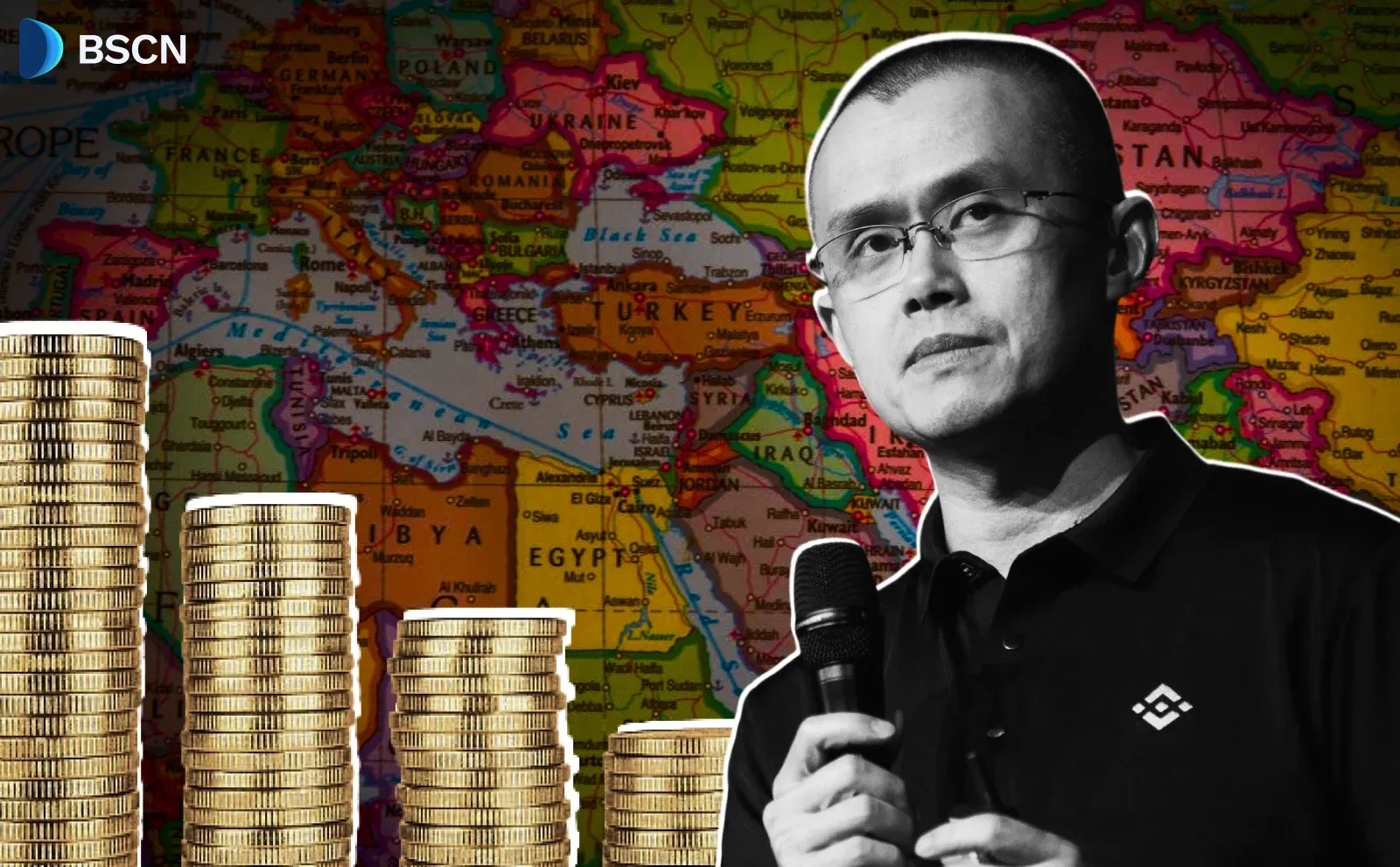


CZ is advising at least a dozen governments on launching national stablecoins and tokenizing sovereign assets. Here's what we know so far.
Changpeng "CZ" Zhao might no longer be running Binance, but he is busier than ever. The former exchange CEO confirmed he's actively advising multiple governments on building national stablecoins and tokenizing sovereign assets, telling a Davos audience in January 2026 that he's in discussions with "probably a dozen governments" on these initiatives.
His pitch is simple: every fiat currency should have an on-chain version. If that sounds ambitious, the early results from Kyrgyzstan suggest it's already happening.
What Exactly Is CZ Proposing?
CZ's advisory work centers on two connected ideas. First, governments should issue stablecoins pegged 1:1 to their national currencies, bringing fiat on-chain to reduce remittance costs, reach unbanked populations, and improve transparency. Second, nations should tokenize real-world assets such as infrastructure, real estate, and natural resources, enabling fractional ownership and blockchain-based sales to raise development capital.
He's also pushed for all government spending to be tracked on an immutable ledger. During a 2025 year-end AMA, CZ listed government advisory work as one of his four core focuses alongside education, investing, and mentoring. He noted the discussions have gone "deeper than expected" into regulatory frameworks and strategies for attracting crypto businesses.
This isn't a CBDC play in the traditional sense. Where central bank digital currencies typically run on permissioned infrastructure controlled by central banks, CZ's model leans on existing public chains, specifically BNB Chain, to issue stablecoins and tokenized assets. The distinction matters because it keeps these instruments closer to DeFi rails than to government-controlled monetary systems.
Where Is This Already Live?
Kyrgyzstan is the furthest along. CZ was appointed as a digital assets advisor to President Sadyr Japarov in May 2025, following a cooperation agreement signed a month earlier. Since then, the results have been concrete.
The KGST stablecoin launched in October 2025, pegged 1:1 to the Kyrgyz som and running on BNB Chain. Separately, a digital som CBDC has been legally recognized and is being piloted in three stages: interbank transfers, treasury integration, and offline payments, with full rollout expected in 2026.
Virtual asset transactions in Kyrgyzstan exceeded $10 billion in the first half of 2025, representing 47% year-over-year growth. The country has also established a national crypto reserve that includes BNB tokens, localized the Binance app in the Kyrgyz language, launched Academy partnerships with 10 universities, and hosted a 1,000-person crypto meetup in Bishkek.
Perhaps most notable: Kyrgyzstan launched USDKG in late 2025, a USD-pegged stablecoin backed by physical gold. The initial issuance was 50 million tokens backed by 376kg of audited gold (~$50 million), with plans to scale reserves to $500 million and eventually $2 billion. Even at its current size, it's one of the first commodity-backed sovereign stablecoins in the world.
What About Pakistan and Others?
Pakistan appointed CZ as a strategic advisor to its Pakistan Crypto Council (PCC) in April 2025. The PCC, launched a month earlier by the Ministry of Finance, aims to regulate the space and protect investors. CZ is working with the Finance Division, State Bank, and Securities Commission to guide crypto policy, infrastructure, and education.
The stakes in Pakistan are significant. Over 100 million citizens remain unbanked, and the country processes billions in annual remittances, much of it through expensive traditional channels. Stablecoins could cut those costs while giving young, digitally native Pakistanis access to financial tools that barely exist in their current system.
Malaysia has entered early-stage discussions with CZ on asset tokenization, though no stablecoin outcomes have been announced yet. Beyond the named countries, CZ has referenced roughly a dozen government conversations, many involving the tokenization of natural resources and revenue streams. Several of these nations, including Bhutan and Kazakhstan, have begun incorporating BNB into their digital reserves alongside BTC and ETH.
How Does This Fit the Bigger Picture?
CZ's government work sits within a larger global shift. The U.S. GENIUS Act has created a friendlier regulatory environment for stablecoins, with Citi projecting $1.9 trillion to $4 trillion in stablecoin issuance by 2030. Stablecoins are proving their value for cross-border payments, particularly in emerging markets where traditional banking infrastructure is limited or expensive.
CZ has also predicted that crypto will become the default payment method for AI agents. That sounds forward-looking, but AI systems operating across borders need programmable, permissionless money, and stablecoins fit that requirement better than bank wires.
There are legitimate concerns. Critics point to concentration risks when a single entity, such as Binance, provides the underlying technology for multiple national projects. Regulatory gaps remain in most of these jurisdictions. And while CZ received a full presidential pardon from Trump in October 2025 for his earlier guilty plea related to Binance's anti-money laundering failures, the episode remains a talking point for skeptics questioning whether governments are doing enough due diligence on their advisors.
Still, the direction is clear. CZ has pivoted from exchange operator to policy advisor, and the governments lining up suggest the appetite for on-chain national currencies is real. Whether this results in lasting infrastructure or another cycle of overpromising will depend on execution.
Follow CZ on X for updates.
Sources:
- CoinDesk — Coverage of CZ's Davos statements on tokenizing assets with approximately 12 governments
- The Block — Reporting on Kyrgyzstan's KGST stablecoin launch, CBDC pilot, and $10B transaction volume
- The Block — Details on CZ's strategic advisory role with Pakistan's Crypto Council
- Fortune — Reporting on CZ's presidential pardon by Trump in October 2025
- CoinDesk — Reporting on Kyrgyzstan's gold-backed USD stablecoin (USDKG) plans
- CoinDesk — Kyrgyzstan's national stablecoin launch and cryptocurrency reserve announcement
- Wu Blockchain — Full transcript of CZ's 2025 year-end AMA detailing his four core focus areas
- U.S. Department of Justice — Official record of Binance's $4.3B settlement and CZ's guilty plea
Disclaimer
Disclaimer: The views expressed in this article do not necessarily represent the views of BSCN. The information provided in this article is for educational and entertainment purposes only and should not be construed as investment advice, or advice of any kind. BSCN assumes no responsibility for any investment decisions made based on the information provided in this article. If you believe that the article should be amended, please reach out to the BSCN team by emailing info@bsc.news.
Author
Crypto Rich
Rich has been researching cryptocurrency and blockchain technology for eight years and has served as a senior analyst at BSCN since its founding in 2020. He focuses on fundamental analysis of early-stage crypto projects and tokens and has published in-depth research reports on over 200 emerging protocols. Rich also writes about broader technology and scientific trends and maintains active involvement in the crypto community through X/Twitter Spaces, and leading industry events.
Related News
Latest News
February 6, 2026
CZ Is Working With Governments to Put National Currencies On-Chain
February 6, 2026
Why Is Vitalik Buterin Selling ETH? $13M+ Dumped in 4 Days

February 6, 2026
What Is Warden Protocol? The AI Wallet That Trades for You

February 6, 2026
CZ's Favorite Perp DEX: Aster Explained

February 6, 2026
How Has Valour’s Pi Network ETP Performed So Far?

February 6, 2026
PancakeSwap Cuts Token Supply and Hits $3.5 Trillion Volume

February 6, 2026
How Low Can ETH Go From Here?

February 6, 2026
InterLink Hits 6M Users: +1M Users in a Single Month