Deepdive
SHIB vs LEASH vs BONE: The Roles, Supplies and Mechanics Behind Shiba Inu's Token Trio

by Soumen Datta
June 12, 2026
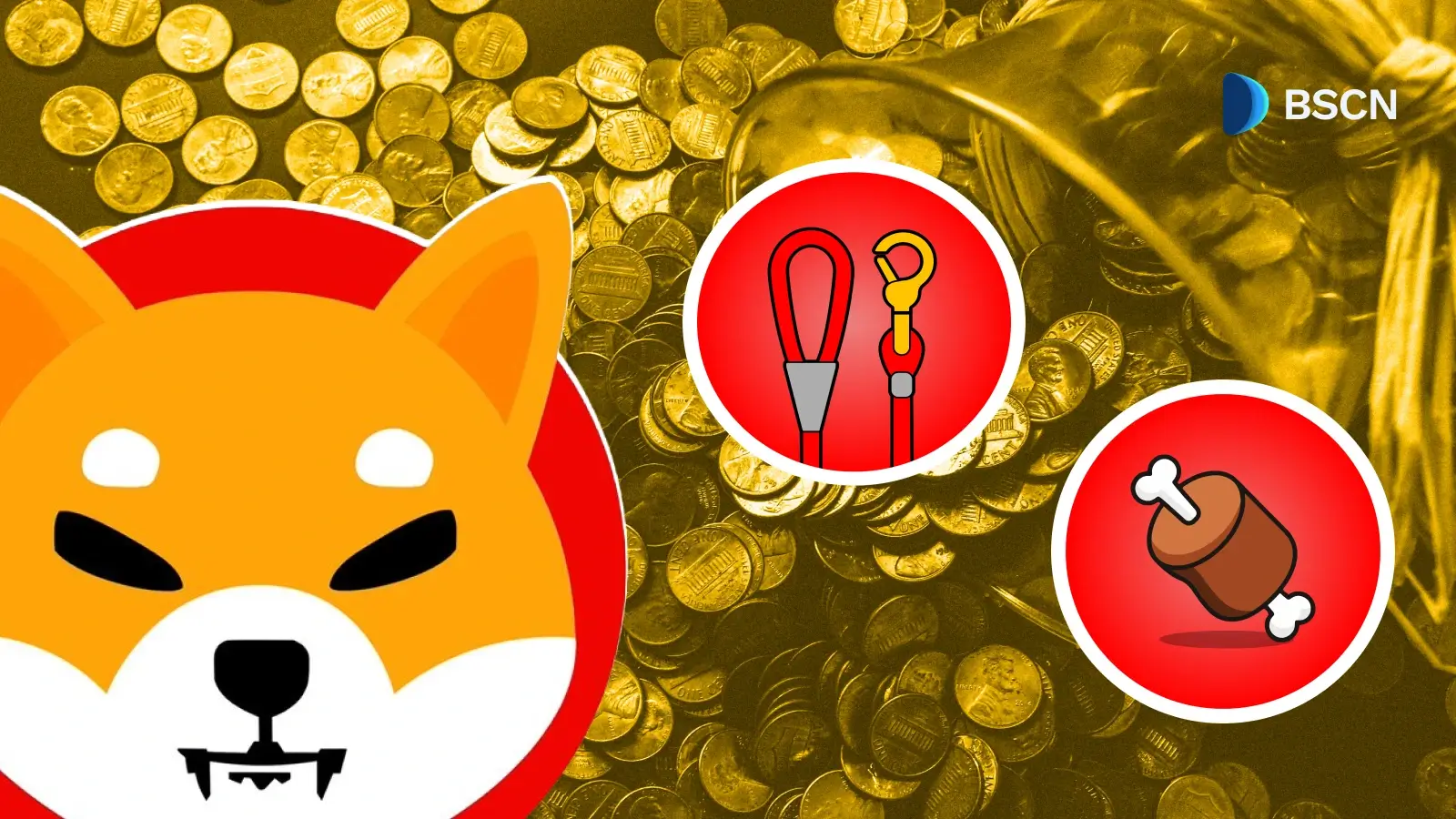


SHIB, LEASH and BONE are three separate tokens in the Shiba Inu ecosystem, each with a different role. Here is how the three-token model works.
Shiba Inu is not a single token. It operates through three separate assets, SHIB, LEASH and BONE, each serving a distinct function within the ecosystem.
SHIB is the primary memecoin with a large circulating supply, LEASH is a low-supply token originally tied to a rebase mechanism that was later abandoned, and BONE is the governance token used to vote on proposals through ShibaSwap and the Shiba Inu decentralized autonomous organization, known as the DOO.
Understanding how these three tokens differ is essential to understanding how the broader Shiba Inu ecosystem actually functions beyond its origins as an internet joke.
What Is SHIB And What Is Its Role?
SHIB is the token most people associate with Shiba Inu. It launched in August 2020 as an ERC-20 token on Ethereum, created by an anonymous developer known as Ryoshi. SHIB was distributed with a total supply of one quadrillion tokens at launch, an unusually large figure even by memecoin standards, designed in part as a tongue-in-cheek contrast to Dogecoin's more modest supply.
A significant portion of the total SHIB supply, reportedly around 50%, was sent to Ethereum co-founder Vitalik Buterin's wallet as a gesture early in the project's history. Buterin later burned the vast majority of those tokens, sending approximately 410 trillion SHIB to a dead wallet address and permanently removing them from circulation. This single act remains one of the largest token burns in cryptocurrency history.
Because of the Buterin burn and ongoing community burns through the burn portal, SHIB's current circulating supply is meaningfully lower than the original one quadrillion total supply at launch. Readers should check live data from CoinMarketCap or Etherscan for the current circulating figure, since it continues to decrease incrementally as burns occur.
SHIB functions primarily as the base trading and holding asset of the ecosystem. It is used across decentralized exchanges and serves as the entry point for most users into the broader Shiba Inu project.
SHIB's Burn Mechanism
The Shiba Inu team operates a dedicated burn portal that allows holders to send SHIB to dead wallet addresses in exchange for RYOSHI, a separate reward token issued specifically through this portal. The amount of RYOSHI a user receives for burning SHIB is influenced by how much BONE that user has staked, meaning the burn portal links three of the ecosystem's tokens together in a single mechanism, SHIB being burned, RYOSHI being rewarded, and BONE staking determining the reward rate.
This burn mechanism is community driven rather than automatic, meaning burns depend on voluntary participation rather than being built into every transaction. Periodic large burns have been organized by community members and, at times, by exchanges and other partners, but the pace of burning relative to SHIB's enormous original supply has historically been slow.
What Is LEASH And How Is It Different From SHIB?
LEASH is the second token in the ecosystem and operates very differently from SHIB. It launched with a fixed total supply of 107,646 tokens. This figure is commonly explained within the Shiba Inu community as a reference to a fraction of the distance to the moon in miles, continuing the space-themed terminology common across memecoin culture, though this origin story is a community explanation rather than an officially documented calculation, and the underlying math behind the exact figure has not been definitively confirmed.
LEASH was originally designed with a rebase mechanism intended to track roughly one-tenth of the price of Dogecoin. A rebase token automatically adjusts its supply up or down based on price targets, rather than letting the price float freely against a fixed supply. This mechanism was abandoned before launch due to community feedback, and LEASH instead launched as a standard fixed-supply ERC-20 token.
LEASH's Current Function
Because of its extremely limited supply compared to SHIB's original one quadrillion tokens, LEASH behaves very differently in practice:
- Its small circulating supply makes it significantly more volatile in percentage terms relative to dollar-value changes
- It is used within ShibaSwap as a stakeable asset, allowing holders to provide liquidity and earn rewards
- It does not carry governance rights in the same way BONE does, despite being part of the same ecosystem
- Its scarcity relative to SHIB has led some holders to treat it as a higher-risk, higher-volatility complement to SHIB holdings
What Is BONE And Why Does It Matter For Governance?
BONE is the governance token of the Shiba Inu ecosystem. It launched with ShibaSwap, the project's decentralized exchange, and has a much smaller total supply than SHIB, capped at 250 million tokens.
BONE's primary function is to give holders voting power within the Shiba Inu decentralized autonomous organization, often referred to as the DOO. Through this structure, BONE holders can vote on proposals affecting the development of the ecosystem, including decisions related to ShibaSwap features, Shibarium parameters, and broader project direction. In addition to governance, BONE has a direct role in the burn portal mechanism, since staked BONE determines the RYOSHI reward rate for users burning SHIB.
BONE's Use Within Shibarium
BONE also plays a role within Shibarium, the Ethereum layer 2 network built by the Shiba Inu team. Shibarium's mainnet launched in August 2023 after several delayed beta phases earlier that year, and the network has been operational for roughly three years as of mid-2026.
A layer 2 network is a separate blockchain that processes transactions away from Ethereum's main chain, known as layer 1, before settling final results back to Ethereum, which reduces fees and increases transaction speed.
On Shibarium, BONE is used as a gas token for paying transaction fees, giving it a functional utility role beyond governance voting. This dual role, governance on the main ecosystem and gas payments on Shibarium, distinguishes BONE from both SHIB and LEASH, neither of which serves as a network fee token. Readers interested in current Shibarium activity, including transaction volume and active wallet counts, can check the network's block explorer for up to date figures.
How Do The Three Tokens Work Together?
The three-token model divides functions that many other projects combine into a single asset. SHIB acts as the broad-based holding and trading asset with the largest user base and highest liquidity. LEASH serves as a low-supply, higher-volatility staking asset within ShibaSwap. BONE handles governance decisions, functions as the gas token on Shibarium, and determines burn portal reward rates when staked.
This separation means that price movements in one token do not necessarily reflect activity in the others. SHIB's price is primarily driven by retail trading volume and broad memecoin market sentiment. LEASH's price can move sharply on relatively small trading volumes due to its limited supply. BONE's value is tied more closely to activity on Shibarium and governance participation, since it has direct utility as a network fee token in addition to its voting function.
For users engaging with ShibaSwap, all three tokens can be staked in different pools through the platform's staking section. The specific pool names and available staking pairs have changed across platform updates since ShibaSwap's 2021 launch, so users should check the current ShibaSwap interface directly for active pools and reward structures rather than relying on names used at earlier points in the platform's history.
Conclusion
SHIB, LEASH and BONE form a three-token structure that splits the Shiba Inu ecosystem into distinct functional layers. SHIB serves as the primary holding and trading asset, launched with one quadrillion tokens at a supply now reduced through the Buterin burn and ongoing community burns via the RYOSHI-rewarding burn portal.
LEASH operates as a fixed-supply, low-circulation staking token following the abandonment of its original rebase design. BONE functions as the governance token for the Shiba Inu DOO, the gas token for the Shibarium layer 2 network which has been live since August 2023, and the determinant of burn portal reward rates through staking.
Each token carries a different role, supply structure, and utility, meaning the three should be evaluated separately rather than treated as interchangeable parts of a single asset.
Resources
- Shiba Inu Official Site – SHIB, LEASH and BONE: Token Overview and Ecosystem Documentation
- ShibaSwap – ShibaSwap Platform: Current Staking Pools and Token Pairing Information
- Shibarium Documentation – Shibarium Layer 2 Network: Architecture, Launch Timeline, and BONE Gas Token Usage
- Shibarium Block Explorer – Shibarium Network Activity: Transaction Volume and Wallet Data
- Etherscan – SHIB Token Contract: Total Supply, Circulating Supply, and Burn Address Tracking
- Etherscan LEASH Contract – LEASH Token Contract: Fixed Supply Verification
- SHIB Burn Portal – Burn Portal Documentation: RYOSHI Rewards and BONE Staking Mechanics
- CoinMarketCap – SHIB, LEASH and BONE: Current Price, Market Cap and Circulating Supply Data
- Shiba Inu DOO Governance Portal – BONE Governance: Active Proposals and Voting Records
Disclaimer
Disclaimer: The views expressed in this article do not necessarily represent the views of BSCN. The information provided in this article is for educational and entertainment purposes only and should not be construed as investment advice, or advice of any kind. BSCN assumes no responsibility for any investment decisions made based on the information provided in this article. If you believe that the article should be amended, please reach out to the BSCN team by emailing info@bsc.news.
Author
Soumen Datta
Soumen has been a crypto researcher since 2020 and holds a master’s in Physics. His writing and research has been published by publications such as CryptoSlate and DailyCoin, as well as BSCN. His areas of focus include Bitcoin, DeFi, and high-potential altcoins like Ethereum, Solana, XRP, and Chainlink. He combines analytical depth with journalistic clarity to deliver insights for both newcomers and seasoned crypto readers.
Related News

Latest News
June 12, 2026
What is XRP Ledger's New AI Starter Kit?
June 12, 2026
Canton Developer Raises $355M in Round Led by A16z

June 12, 2026
Stellar's Role in Cross-Border Payments: Active Corridors and Settlement Partners
June 12, 2026
SHIB vs LEASH vs BONE: The Roles, Supplies and Mechanics Behind Shiba Inu's Token Trio
June 11, 2026
Is Ethereum Still The Dominant Smart Contract Blockchain?
June 11, 2026
Is Stellar XLM Going Quantum-Resistant?
June 11, 2026
LUNC vs LUNA: How the Two Chains Split and What Each Is Doing Now

June 11, 2026
BlackRock's Bitcoin ETF Explained: How IBIT Works and Who It Targets